
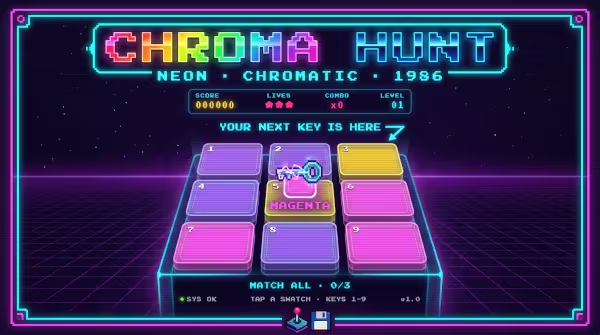
Color Matching Game
Practice color recognition, matching, and memory through color games
How to Play
- 1Color Match: Determine if the word color matches the text color
- 2Tap the Color: Find and tap the requested color from the grid
- 3Shade Finder: Match the exact shade from multiple similar colors
- 4Color Memory: Watch and repeat the color sequence (Simon game)
The Stroop-like colour interference modes train cognitive inhibition, the ability to suppress an automatic response in favour of a deliberate one. This is a core component of executive function that governs impulse control and flexible attention switching.
About This Game
The Colors game trains visual attention, colour perception, and selective focus through fast-paced matching challenges. The core task, identifying a target colour in a grid of visually similar colours, develops the ability to discriminate between closely related stimuli quickly and accurately. This form of perceptual discrimination is a fundamental component of visual processing speed, which influences how efficiently the brain extracts information from its environment.
More advanced modes introduce Stroop-like interference: the name of a colour is displayed in a different colour, and you must respond to the ink colour rather than the word. This variant specifically trains cognitive inhibition, the ability to suppress an automatic response (reading the word) in favour of a deliberate one (identifying the colour). Cognitive inhibition is a key component of executive function, which governs attention management, impulse control, and flexible thinking under competing demands.
Regular practice with interference tasks has been shown to improve performance on a broad range of executive function measures, including sustained attention and task-switching speed. Suitable for all ages as both a focused cognitive training exercise and a genuinely engaging visual challenge that becomes surprisingly competitive once you start tracking your best times.
Color Matching Game
Practice color recognition, matching, and memory through color games
What this game trains and how it helps
The Colors game trains visual attention, colour perception, and selective focus through fast-paced matching challenges. The core task, identifying a target colour in a grid of visually similar colours, develops the ability to discriminate between closely related stimuli quickly and accurately. This form of perceptual discrimination is a fundamental component of visual processing speed, which influences how efficiently the brain extracts information from its environment.
More advanced modes introduce Stroop-like interference: the name of a colour is displayed in a different colour, and you must respond to the ink colour rather than the word. This variant specifically trains cognitive inhibition, the ability to suppress an automatic response (reading the word) in favour of a deliberate one (identifying the colour). Cognitive inhibition is a key component of executive function, which governs attention management, impulse control, and flexible thinking under competing demands.
Regular practice with interference tasks has been shown to improve performance on a broad range of executive function measures, including sustained attention and task-switching speed. Suitable for all ages as both a focused cognitive training exercise and a genuinely engaging visual challenge that becomes surprisingly competitive once you start tracking your best times.
How to Play
- Color Match: Determine if the word color matches the text color
- Tap the Color: Find and tap the requested color from the grid
- Shade Finder: Match the exact shade from multiple similar colors
- Color Memory: Watch and repeat the color sequence (Simon game)
Goal
Identify the target colour in a grid, or in harder modes respond to the colour of the text (not the word) to train selective attention.
Difficulty
Basic mode: find the target colour. Stroop-like mode: name the colour of the text, not the word. Difficulty affects speed and grid size.